
Schengen visa photo: size and requirements
Schengen visa applications commonly use a 35 × 45 mm photo with the face centred on a plain, light background. The European Commission guide allows a width of 35–40 mm with the face covering 70–80% of the photo, and national rules add their own detail. VisaPhoto’s template follows the French biometric reference: 35 × 45 mm with 32–36 mm from chin to crown.
Photo size & positioning
Photo requirements
- Photo size
- 35 × 45 mm (VisaPhoto template; the EU guide allows a 35–40 mm width)
- Pixels
- 413 × 531 px at 300 DPI for printing
- Head height
- 32–36 mm from chin to crown, excluding bulky hair (French national reference)
- Face coverage
- 70–80% of the photo (European Commission guide)
- Framing
- Full head and upper shoulders, face centred
- Background
- Plain light grey or off-white
- Recency
- A recent photo that shows your current appearance; check your consulate’s time limit
- Glasses and expression
- Neutral expression, mouth closed, eyes open; no tinted glasses
Photo rules
- Look straight at the camera with a neutral expression and your mouth closed.
- Keep both eyes open and clearly visible, with no hair across them.
- Do not wear sunglasses or tinted glasses. With clear glasses, avoid glare and frames over the eyes; some consulates ask you to remove them.
- Wear a head covering only for religious or medical reasons, with the whole face visible.
- Use even lighting with no shadows on the face or the background.
- Show your natural appearance: no filters, beauty retouching or changes to facial features.
Common reasons for rejection
- Head too small or too large for the 32–36 mm band
- Shadows on the face or behind the head
- Background that is patterned, dark or not plain
- Smiling, an open mouth or a tilted head
- Glare on glasses or hair covering the eyes
- Wrong format, such as a 2 × 2 inch photo instead of 35 × 45 mm
- Blurry, pixelated or low-contrast print
3 steps with VisaPhoto
- 1
Upload a selfie
Take a clear, front-facing photo with your phone and upload it.
- 2
Generate and check
AI creates a portrait in this format; framing and image quality are checked.
- 3
Review and download
Compare the result with the official rules, then download your JPEG files.
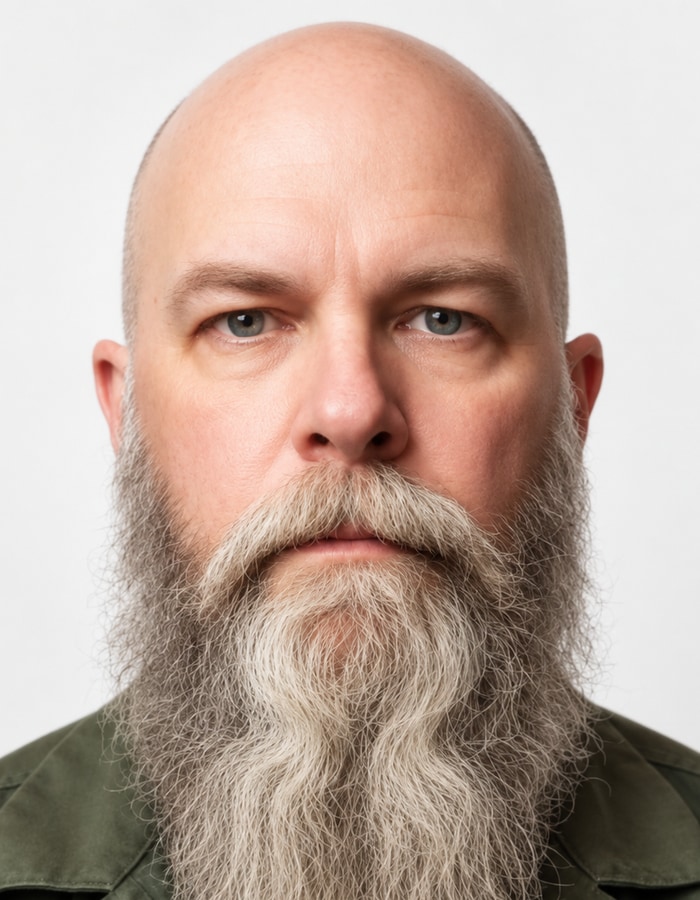
Example

Frequently asked questions
What size is a Schengen visa photo?
A 35 × 45 mm frame is the common format, and VisaPhoto exports it at 413 × 531 pixels for 300 DPI printing. The European Commission guide itself allows a width of 35–40 mm, so check the size your consulate asks for.
Can I use a photo taken with my phone?
You can upload a clear phone selfie to VisaPhoto: face the camera in soft, even light and do not use filters. VisaPhoto then creates a portrait with a plain background and crops it to the template. If your consulate wants a printed photo, print the download at its full 35 × 45 mm size without scaling.
What background colour is required?
A plain, light background with no pattern or shadows. VisaPhoto’s Schengen template uses light grey or off-white; some countries specify a particular shade, so check your consulate’s instructions.
Can I wear glasses in a Schengen visa photo?
Tinted glasses are not suitable. Some consulates allow clear glasses if your eyes are fully visible with no glare, but removing them is the safer choice.
Can I use a VisaPhoto portrait for a Schengen visa?
VisaPhoto creates an AI-assisted portrait from your selfie and checks its framing and image quality against this template. It cannot promise acceptance: compare the result with your consulate’s rules before you apply, and ask them if you are unsure whether an AI-assisted portrait is suitable.
Official sources
- European Commission · Photo guidelines
- France-Visas · Visa photo requirements
- French government · Biometric format
- Netherlands Worldwide · Photo requirements
Sources checked on 2026-09-20.